


Understanding the distinction between data analytics and data science can be challenging, as these fields share overlapping techniques but have different goals and methodologies. While both deal with deriving insights from data, their scope and application vary significantly.
Ready to start a career in data analytics or data science? Unlock your potential with our online courses tailored for aspiring data analysts and data scientists.
Purchase our online courses today and gain hands-on skills, certifications, and career guidance. Start your journey to mastering data!
Data science is focused on leveraging advanced techniques to predict outcomes and foster innovation, whereas data analytics revolves around analyzing historical data to support immediate decision-making. In this article, we’ll break down the definitions, scopes, roles, skills, and processes associated with data analytics and data science.
What is Data Analytics?
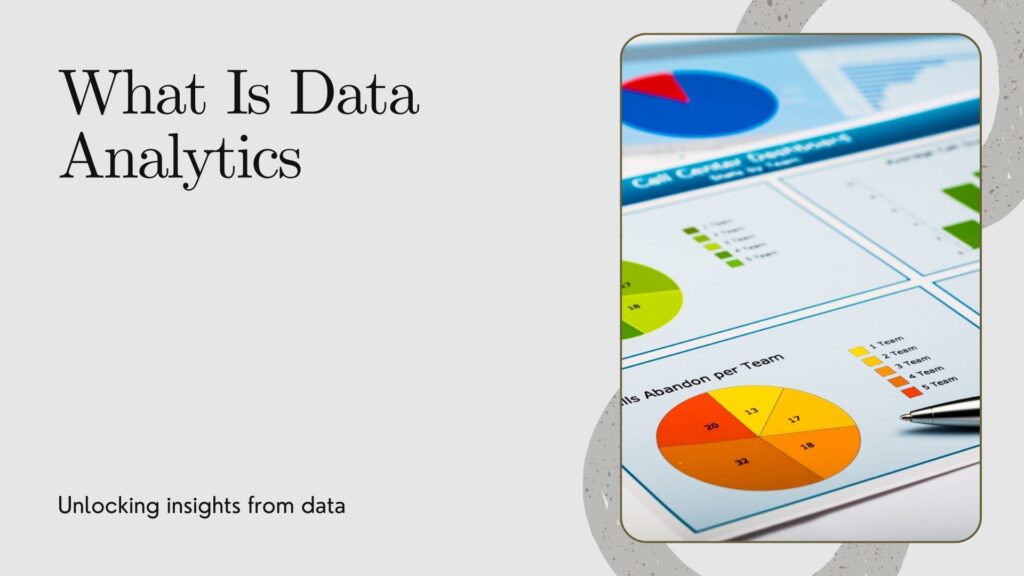
Data analytics involves the examination of existing datasets to uncover actionable insights for solving current problems. Analysts focus on using structured data and established methodologies to create solutions that can drive immediate improvements in business processes.
Responsibilities of a Data Analyst:
- Data Collection: Gathering data from internal systems, surveys, or external sources.
- Data Processing: Cleaning and organizing data to ensure accuracy and usability.
- Data Analysis: Using statistical tools to identify trends and patterns.
- Visualization: Presenting data insights using tools like Tableau, Power BI, or Excel.
- Recommendations: Providing actionable insights to improve business strategies.
- Tool Proficiency: Leveraging SQL, Python, R, and visualization software.
- Collaboration: Working with teams across departments to align data insights with organizational goals.
What is Data Science?
Data science is a broader field that incorporates predictive analytics, machine learning, and artificial intelligence to solve complex and often undefined problems. It focuses on exploring large, unstructured datasets to discover new insights and possibilities.

Responsibilities of a Data Scientist:
- Data Collection: Managing large, complex datasets from structured and unstructured sources.
- Advanced Analysis: Employing machine learning and statistical methods to predict trends.
- Algorithm Development: Creating models to process and analyze vast datasets.
- Data Visualization: Developing advanced and interactive visual tools to communicate findings.
- AI and ML Integration: Using artificial intelligence to automate processes or enable decision-making.
- Product Development: Enhancing services and products based on data-driven insights.
- Research: Experimenting with new methodologies and techniques to improve data analysis.
Where Can Data Analysts and Data Scientists Work?
Data analysts and data scientists find opportunities in diverse industries, including:
- Technology: Building predictive models, managing big data, and creating AI-driven applications.
- Healthcare: Analyzing patient data for personalized treatment and medical research.
- Finance: Detecting fraud, optimizing investments, and risk analysis.
- Retail and E-commerce: Personalizing customer experiences and optimizing inventory.
- Manufacturing: Improving supply chains and production processes through data.
- Media and Entertainment: Recommending content and analyzing viewer preferences.
- Government: Enhancing public services through policy analysis and forecasting.
Data Analyst vs. Data Scientist: Key Differences
| Aspect | Data Analyst | Data Scientist |
| Focus | Solving defined problems using historical data. | Exploring and predicting solutions for undefined problems. |
| Data Type | Structured data. | Structured and unstructured data, including text, images, and videos. |
| Tools | SQL, Excel, Tableau, Power BI. | Python, R, Hadoop, Spark, TensorFlow. |
| Primary Goal | Immediate decision-making and process improvement. | Long-term innovations and strategic predictions. |
| Skills | Statistical analysis, data visualization, and reporting. | Machine learning, AI, big data technologies, and advanced predictive modeling. |
| Output | Reports and dashboards. | Predictive models, AI tools, and algorithms. |
Skill Set Comparison For Data Analyst & Data Science
Data Analysts:
- Proficiency in data visualization tools like Tableau and Power BI.
- Expertise in SQL and basic programming languages like Python or R.
- Strong understanding of statistics and business acumen to interpret trends.
- Effective communication for presenting findings to stakeholders.
Data Scientists:
- Advanced knowledge of machine learning algorithms and AI.
- Proficiency in programming with Python, R, Java, or Scala.
- Experience with big data platforms like Hadoop and Spark.
- Strong foundation in mathematics and statistical modeling for predictive analysis.
- Capability for innovation and solving undefined problems.
Career Opportunities in Data Analytics and Data Science:
Data Analytics Career Paths
- Data Analyst: Solve business problems through data.
- Business Analyst: Focus on strategy and operations using data insights.
- Marketing Analyst: Analyze customer behavior and campaign performance.
- Operations Analyst: Optimize processes and resource allocation.
Data Science Career Paths
- Data Scientist: Build advanced models to solve complex problems.
- Machine Learning Engineer: Develop intelligent systems and algorithms.
- AI Specialist: Design AI-based applications like natural language processing.
- Big Data Engineer: Manage and analyze massive datasets efficiently.
Processes in Data Analytics vs. Data Science:
Data Analytics Process:
- Define Requirements: Determine the data needed to solve specific problems.
- Integrate and Manage Data: Process and clean datasets for analysis.
- Analyze Data: Apply statistical tools to identify trends and insights.
- Share Insights: Present findings through reports and dashboards.
Data Science Process:
- Goal Definition: Collaborate with stakeholders to set objectives.
- Data Collection: Design systems for gathering structured and unstructured data.
- Exploration: Analyze data using machine learning and advanced techniques.
- Model Building: Develop algorithms to address complex challenges.
- Insights Deployment: Share findings to guide strategic decisions.
The process of data analytics involves defining requirements, integrating and managing the data, analysing the data, and sharing the insights. Data analysts prepare, manage, and analyse well-defined datasets to identify trends and create visual presentations to help organisations make better, data-driven decisions.
The process of data science involves several stages, starting from goal definition to model deployment and presentation. The data scientist works closely with business stakeholders to define goals and objectives for the analysis. Post this, they design and implement data collection systems, followed by investigating and exploring the data. They then choose one or more potential analytical models and algorithms and build these models. Once the models are refined, they are run using the available data to produce insights, which are then shared with all stakeholders.